


The High Anti-Corruption Court (HACC) has concluded a high-profile trial, finding Oleksandr Shcherbyna, a judge of the Pavlohrad City-District Court in Dnipropetrovsk Oblast, guilty of receiving undue benefits. The judicial official was sentenced to 5 years in prison with confiscation of property for issuing a «customized» acquittal.
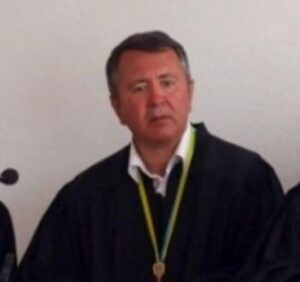

This corruption case has drawn significant public attention not only due to the unusual way the bribe was handed over, but also because of illegal mobilization attempts and procedural manipulations by the defense.
The investigation revealed that Judge Shcherbyna demanded money to close a criminal case against a director of a construction company. The businessman was suspected of violations while performing construction work commissioned by the Pavlohrad City Council. Initially, the judge estimated his «service» at $2,000.
The first part of the bribe, amounting to $1,000, was handed over inside the courthouse by placing the money in a folder with documents. Detectives from the National Anti-Corruption Bureau of Ukraine (NABU) captured the second transaction through surveillance evidence: NABU released a striking photo of a transparent plastic bag allegedly containing tomatoes, inside of which neatly folded US dollar bills were hidden. Shcherbyna personally instructed his interlocutor on this conspiracy method, despite fearing cameras and potential exposure. Despite the ongoing criminal proceedings and the trial in the HACC, the acquittal for the construction company director remains in effect, although the prosecutor’s office attempted to appeal it.
Materials from covert investigative actions indicate that Shcherbyna repeatedly and illegally communicated with the defendant outside of court sessions. Specifically, the judge advised the man to change his lawyer and hire a female defense attorney who had previously worked as his assistant.
According to the plan, this lawyer was supposed to draft the text of the verdict because the judge himself allegedly had about «a hundred cases a day.» The former assistant confirmed in the HACC that she wrote about 90% of Shcherbyna’s rulings, although in this specific case, the judge brought the text of the verdict on a flash drive.
When the prosecutor failed to appear for the final hearing in July, the judge personally dictated a complaint against the prosecutor to the defendant and instructed him on what to say. Two weeks later, the hearing took place, the court issued the acquittal, and searches were conducted in Shcherbyna’s office immediately afterward.
Special attention was paid during the trial to the defense’s attempts to delay the proceedings. In June, during the active phase of the trial at the HACC, Oleksandr Shcherbyna voluntarily joined the Armed Forces of Ukraine, choosing a combat unit and receiving the position of a machine gunner.
Following this, his lawyers demanded a halt to the trial due to the judge’s inability to participate. However, the Military Medical Commission (MMC) found him fit solely for service in rear-line units. Furthermore, Ukrainian legislation explicitly prohibits the armed forces from recruiting individuals accused of severe corruption offenses during ongoing judicial proceedings.
The military unit later confirmed that Shcherbyna concealed the fact that he was facing criminal charges. Consequently, a series of court hearings were disrupted, prompting the command to conduct internal investigations and hold negligent officials disciplinarily accountable. Even during court debates, the defendant was periodically dispatched to perform combat missions, complicating the process further.
«The court noted that the defense repeatedly abused procedural rights by filing groundless motions to suspend the proceedings and creating artificial obstacles to delay the trial,» the court ruling states.
During the court hearings, Oleksandr Shcherbyna pleaded only partially guilty. He stated that he felt pained and ashamed for his actions, but insisted that he had never extorted money from anyone. The judge asked the court to mitigate his sentence, citing his age, health condition, charitable donations to the Armed Forces of Ukraine, and voluntary mobilization.
However, the court remained firm: the HACC found the former judge guilty and imposed a real prison sentence of 5 years with full confiscation of property.