


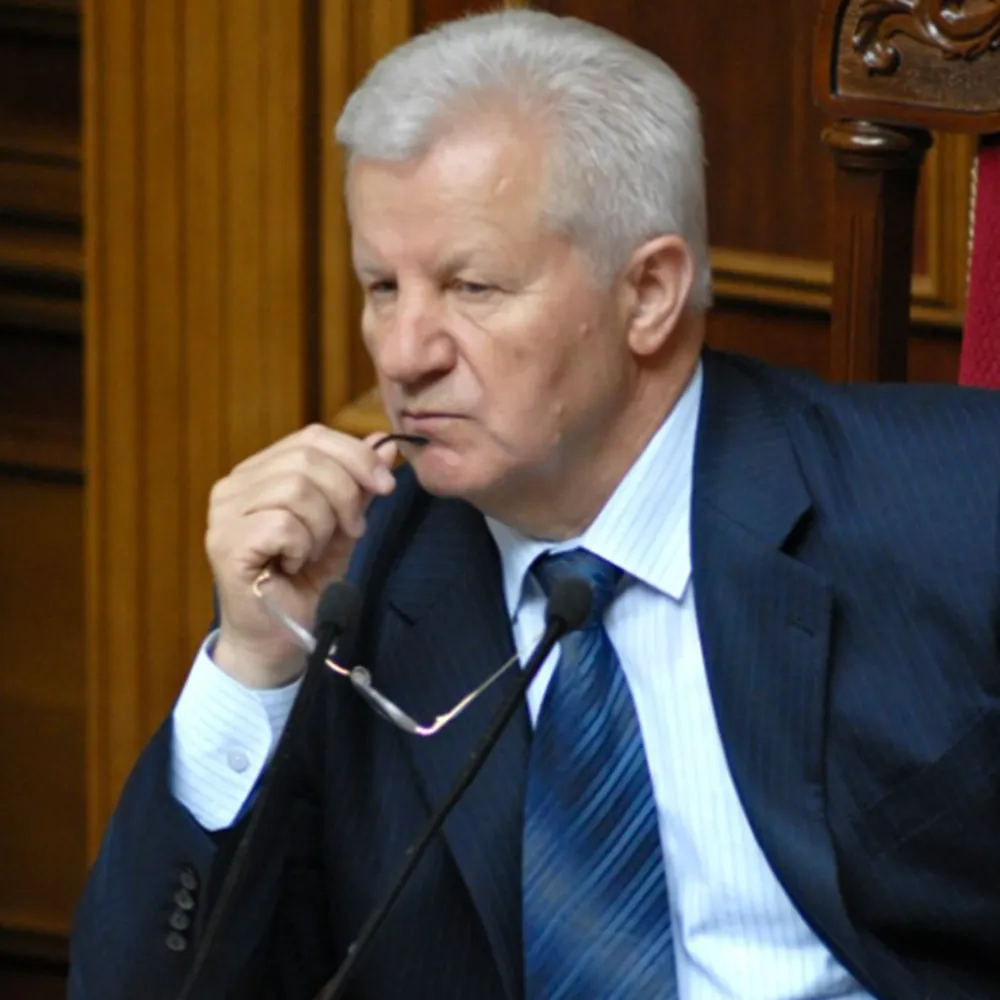
Moroz Oleksandr Oleksandrovych
Official biography
Born in Buda village, Tarashchansky district, Kyiv region. In 1965, he graduated from the Ukrainian Agricultural Academy with a degree in agricultural mechanics. In 1983, he graduated from the Higher Party School at the Central Committee of the Communist Party of Ukraine.
Career
- He began his career in 1965 as an engineer at the Yemelchyn District Association “Silkhoztekhnika”. After serving in the army, in 1966-1974, he worked as a lecturer and head of the agricultural mechanization department at the Tarashchanka Agricultural College.
- In 1974-1976, Oleksandr Moroz worked as a senior engineer at the Tarashchanka District and Kyiv Regional Agricultural Engineering Associations.
- In 1976, he joined the party. Until 1983, he worked as the head of the sector and deputy head of the agricultural department of the Kyiv regional committee of the Communist Party.
- In 1983-1985, he was the secretary of the Kyiv Regional Council of Trade Unions.
- In 1985-1989, he was the first secretary of the party committee of Kyiv regional organizations and institutions.
- In 1989-1990, he headed the agricultural department of the Kyiv regional committee of the Communist Party of Ukraine.
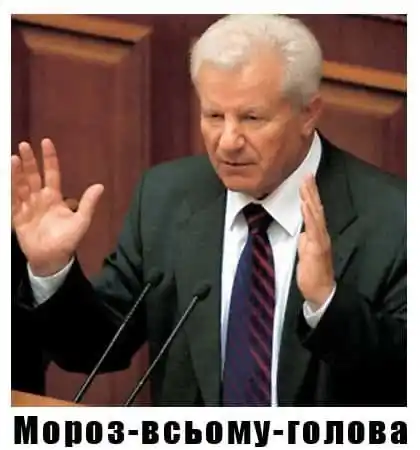
- From 1991 to 2012, Oleksandr Moroz was the leader, chairman of the political council of the Socialist Party of Ukraine and head of its faction in the parliament.
- From 1990 until 2007, he was a permanent member of parliament. In the Verkhovna Rada of the first convocation, he was the secretary of the Commission on Agricultural Issues, and in his first year as a member of parliament he headed the parliamentary majority.
- In 1994-1998, Mr. Moroz was the Speaker of the Parliament.
- From 1994 to 1996, he was a co-chairman of the Constitutional Commission and played a major role in the preparation and adoption of the Constitution of Ukraine.
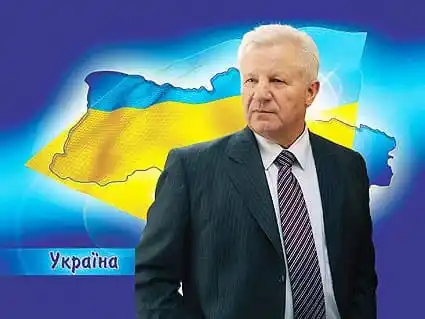
In 1998-2000, he was the chairman of the Parliamentary Committee on Agrarian Policy and Land Relations, and for the next two years he was a member of the same committee. In the Parliament of the IV convocation (2002-2006), Oleksandr Moroz worked in the Committee on Legal Policy.
In 1994, 1999, and 2004, he ran for the presidency, but did not receive adequate support from voters. He was one of the main initiators of the political reform approved by the Verkhovna Rada in December 2004, which expands the powers of the parliament and government while limiting the power of the president.
In July 2006, he was elected Speaker of the Verkhovna Rada for the second time. This happened as a result of the creation of a parliamentary majority consisting of the Socialist Party, the Party of Regions and the Communist Party of Ukraine, after the Socialists, led by Oleksandr Moroz, unexpectedly refused to block with Our Ukraine and the Yulia Tymoshenko Bloc, in a move that surprised their political allies and “orange” voters.
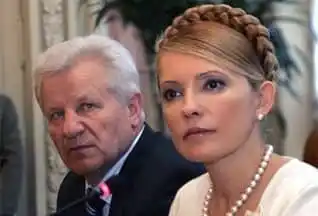
In the 2012 parliamentary elections, Moroz ran in a majority constituency in the Myronivskyi district of Kyiv region, but lost to Oleksandr Onyshchenko of the Party of Regions .
He is married. He has two daughters, the eldest is a music teacher, the youngest is engaged in business. He has six grandchildren.
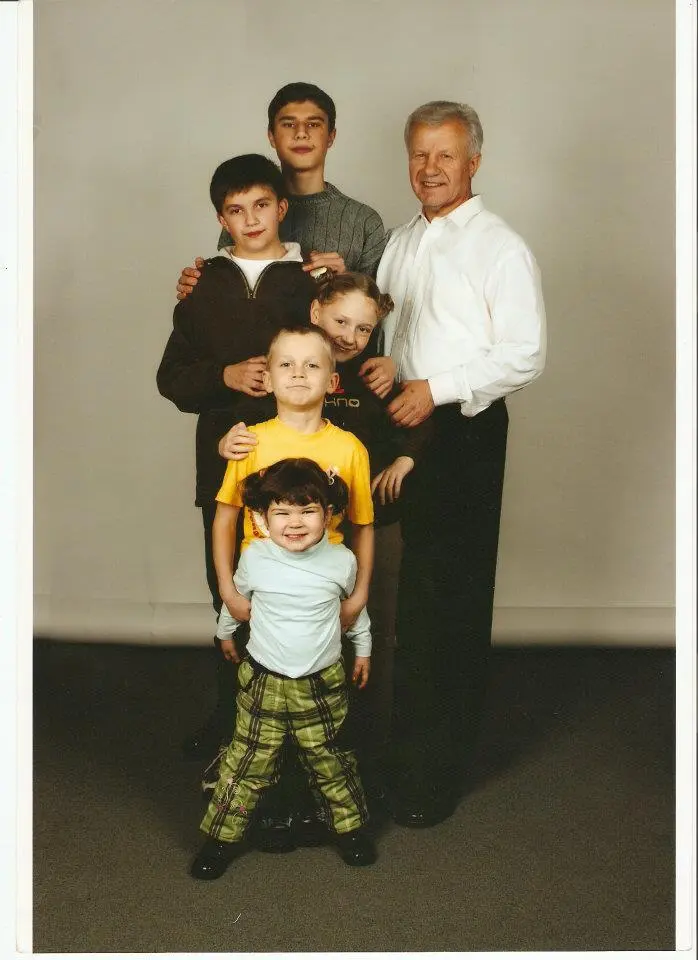
The politician is fond of poetry (he writes poetry). He likes chess, billiards, spinning fishing, and swimming.
Compromising material
In May 2003, MP Oleh Tyahnybok published a memo from the then head of the State Tax Administration in Lviv region to the then head of the State Tax Administration of Ukraine Yuriy Kravchenko about the financing of the Ukrainian opposition through JSC Credit Bank (Ukraine). According to the memo, in October 2002, Oleksandr Moroz, along with Viktor Yushchenko and Yulia Tymoshenko, met with Prime Minister Leszek Miller in Poland and asked for financial assistance. However, there was no refutation or confirmation of this information by Mr. Moroz. Nor did other Ukrainian opposition figures.
In October 2004, the JVP appeared on a list of organizations to which Saddam Hussein allegedly promised cheap oil in exchange for their support for lifting the UN sanctions. This document was made public by military inspectors from the Iraq Study Group and the CIA.
There have also been suggestions of cooperation with Iraq in the PSPU, but the leader of the Progressive Socialist Party of Ukraine, Natalia Vitrenko, categorically rejects the suggestion that the PSPU could have been financed by Saddam Hussein’s regime, and stated that: “Initially, Moroz played a double game.”
In 1996, the politician played a leading role in the adoption of the CC. As the Speaker of the Parliament under President Leonid Kuchma, who planned to reform the system of public administration, Oleksandr Moroz, despite the fact that voters gave an affirmative answer to all 4 questions, initiated consideration of the president’s reform project.
As a reminder, Leonid Kuchma intended to submit for public discussion a version of the document concentrating power in the hands of a bicameral parliament. Experts called the implementation of the referendum results beneficial to the president. The leader of the Socialists demanded that the draft be considered immediately.
As a result, Leonid Kuchma failed to implement the referendum results. The Verkhovna Rada did not introduce the relevant amendments to the legislation. The agenda for Ukrainian politicians was completely changed by the “cassette scandal” that broke out at that time.
When in 2006 Oleksandr Oleksandrovych switched sides to the Party of Regions and the Communist Party, MP Oleh Lyashko said that he had some evidence of “betrayal of the Orange”. He claimed to have given a bribe of $300 million to the leader of the Socialist Party for the Socialists to join the Party of Regions coalition. According to open sources, the court subsequently found Oleh Lyashko’s information unreliable and ordered the MP to refute it.
The socialist’s accusations of pro-Russian politics arose from the fact that after leaving politics, the former speaker began to write poetry. In 2018, he was awarded the title of laureate of the Coronation of the Word literary competition for his collection of poems, Novynarnya.
During the award ceremony, Oleksandr Oleksandrovych complained that our state does not care about culture, which hurt Yuriy Logush, the founder of the competition. He couldn’t hide his emotions and reminded the laureate that he had been in power for a long time. And the fact that the state does not care about culture is his direct fault.
Moreover, Yuriy Logush demanded a public apology, accusing the former leader of the SPU of the pro-Russian policy pursued by his party. However, there was no apology from the poet-politician.
The Lazarenko case
When the fugitive corrupt official Pavlo Lazarenko was arrested in the United States, the domestic media reported that the former Prime Minister of Ukraine had sponsored Oleksandr Moroz’s 1999 presidential election campaign. The leader of the Socialists denied this information. “I know who transferred Lazarenko to Kyiv from Dnipropetrovs’k, made him deputy prime minister, prime minister, awarded him orders, and dismissed him for health reasons. I know who steamed in the sauna with Lazarenko, who opened an air corridor to Greece for him three days before his flight, who pushed the prosecutor out of the way, saying that if you give me permission, I will arrest him. Well, please, the permission has been given, so where is Lazarenko, the question arises?” (ICTV, March 5, 2002).
The case of Viktor Bozhenar
Active attempts to compromise Oleksandr Moroz were made back in 1995. Back then, law enforcement officers arrested his advisor, Viktor Bozhenar. However, having failed to find any criminal offense in his actions, they were later forced to release him from custody. At the same time, information emerged about funds that were allegedly illegally transferred on Oleksandr Oleksandrovych’s instructions to implement a project in Okhtyrka, Sumy region. However, the attempt to cast a “shadow” on Oleksandr Moroz failed:
“I know who transferred Lazarenko to Kyiv from Dnipro, made him deputy prime minister, prime minister, awarded him orders, and dismissed him for health reasons. I know who steamed in the sauna with Lazarenko, who opened an air corridor to Greece for him three days before his flight, who pushed the prosecutor out of the way, saying that if you give me permission, I will arrest him. Well, please, the permission has been given, so where is Lazarenko, the question arises?” (ICTV, March 5, 2002).
The case of Natalia Vitrenko
On October 2, 1999, an attempt was made to assassinate Natalia Vitrenko near the House of Culture of the Ingulets Mining and Processing Plant (Kryvyi Rih). The police accused Serhiy Ivanchenko, Oleksandr Moroz’s confidant, of the attack. Although he denied this fact, he was convicted, and Oleksandr Moroz lost his chances of winning the presidential election. The Socialist leader himself believes that this operation was organized by the special services and was intended to discredit him. This was confirmed by Mykola Melnychenko.
“The cassette scandal”
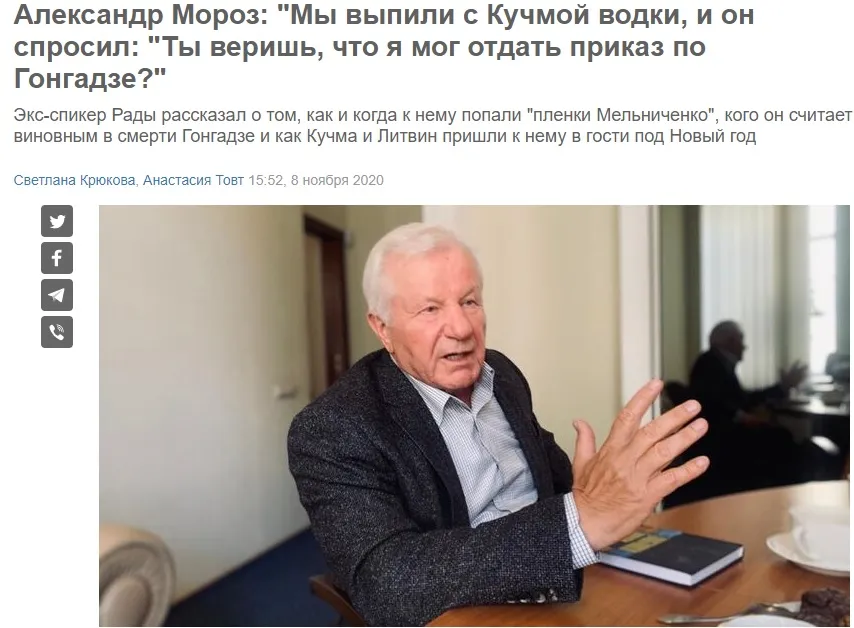
Twenty years ago, Oleksandr Moroz became a man who influenced the course of Ukraine’s history.
It was he who, in November 2000, at a press conference in the Verkhovna Rada, made public the so-called “Melnychenko tapes” — recordings with voices similar to those of then-President Leonid Kuchma and his closest confidants discussing the massacre of journalist Georgiy Gongadze.
The recordings also include the voice of Volodymyr Lytvyn, the former speaker of the Verkhovna Rada. He has already described his version of the story in detail in an interview with Strana.
“Now we met with Oleksandr Moroz. He told us how he got the recordings, who was offered them to him, who he considers responsible for Gongadze’s death, and about his meeting with Kuchma on New Year’s Eve 2001.”
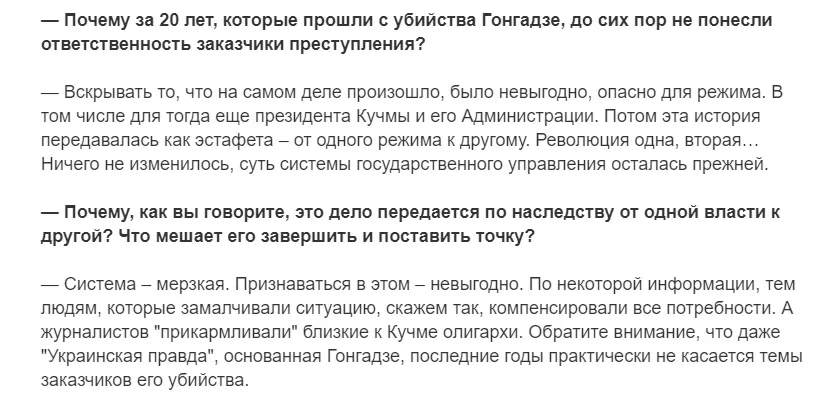
On September 16, 2002, the website Compromat.ru published a transcript of a telephone conversation between the editor-in-chief of Ukrainska Pravda, Olena Prytula, and the former director of the Ukrainian service of Radio Liberty, Roman Kupchynsky. During this conversation, the latter said that certain forces intend to make public the version that the murder of Georgiy Gongadze was ordered by Oleksandr Moroz. The leader of the Union of Right called the version of his involvement in the journalist’s disappearance “thoughtless”.
By the way, during the presidential race in 2004, Oleksandr Moroz publicly promised to take all possible measures to clarify all the circumstances of the death of journalist Georgiy Gongadze if he was elected president. “I promise to use all my political influence to bring the preliminary investigation to its logical conclusion in order to guarantee a public, open and impartial trial in the case of Mr. Gongadze,” Mr. Moroz said (proUA, September 9, 2004).
At the moment, the recordings in President Kuchma’s office are not evidence in the case of the murder of journalist Gongadze. One of the reasons for this is the absence of the original device used to make the recordings. There is little doubt in Ukraine that they are genuine. However, it is still unknown who, besides Melnychenko, wiretapped the Ukrainian president and under what circumstances. This case is not being investigated. There is a version that Russian special services are involved.
Homosexual associates
In May 2003, in Sumy, the Vidikon TV channel showed the movie “The Bitter Truth about Alexander Moroz”. The essence of the film is the presentation of the former candidate for mayor of Sumy from the opposition forces, Serhiy Klochko, as an inept leader and a homosexual. Oleksandr Moroz refused to comment on the content of the film.
In an interview with journalists, Yuriy Lutsenko, a member of the SPU faction, explained that in the parliament, Yevhen Anoprienko, an assistant to MP Volodymyr Shcherban, handed out a leaflet in the lobby of the parliament, signed allegedly by residents of Sumy, stating that the SPU candidate for mayor of Sumy, Serhiy Klochko, was a homosexual.
According to Lutsenko, the same person was distributing a disk with the movie “The Bitter Truth about Alexander Moroz”.
A favorite of the SDPU(o)
After Oleksandr Moroz spoke out in support of the constitutional reform insisted on by Leonid Kuchma and his entourage in the fall of 2003, the leader of the SPU was accused of “treason.” There were rumors on the sidelines that Oleksandr Moroz began to work closely with the leader of the SDPU, Viktor Medvedchuk.
Moroz also advocated for granting Russian the status of an official language (but not a second state language) in Ukraine. He is fond of poetry, and has written seven books himself (“Where are we going?…”, 1993; “Choice”, “A topic for reflection”, 1996; “Between the Eternal Poles”, 1999; “About the land, the Constitution and not only”, 2000; “Chronicle of a crime”, 2001).
A protege of Victor Pinchuk
The leader of the Communist Party, Petro Symonenko, said that supporting Oleksandr Moroz as a presidential candidate of the Communist Party (United) means supporting the leader of the Socialists, Leonid Kuchma’s son-in-law, Viktor Pinchuk.
Moroz’s ambitions
The leader of the SPU explained his own exclusivity as follows: “I am not eager for power, but my experience in big politics is enough to say the following: either you vote for me and remove the current regime from power, or you vote for someone else, and then Kuchma will be
Kuchma will remain in power” (From Oleksandr Moroz’s address to the Ukrainian people, September 14, 1999). The loss in the 1999 presidential election seriously hurt Oleksandr Moroz’s political ego. The offended leader of the SPU even reproached Ukrainians for “stupidly and consistently following Kuchma like sheep to the slaughter”. “As much as it pains me to say this, they have not yet matured to the status of a people, they are just people and the population,“ Moroz said (”Kyivski Vedomosti,” April 4, 2000). This was the disrespectful tone in which Alexander Moroz commented on the choice of the Ukrainian people.
“I do not feel the complex of a person who lost, at least because I did not lose the second election. This victory was stolen by the current president, and yet there is also evidence of Major Melnychenko.” “By the way, I’m not seeking the presidency, I think it’s necessary to change the system of government.” He repeated these words to journalists quite often, and he is confident in himself.
On income and family
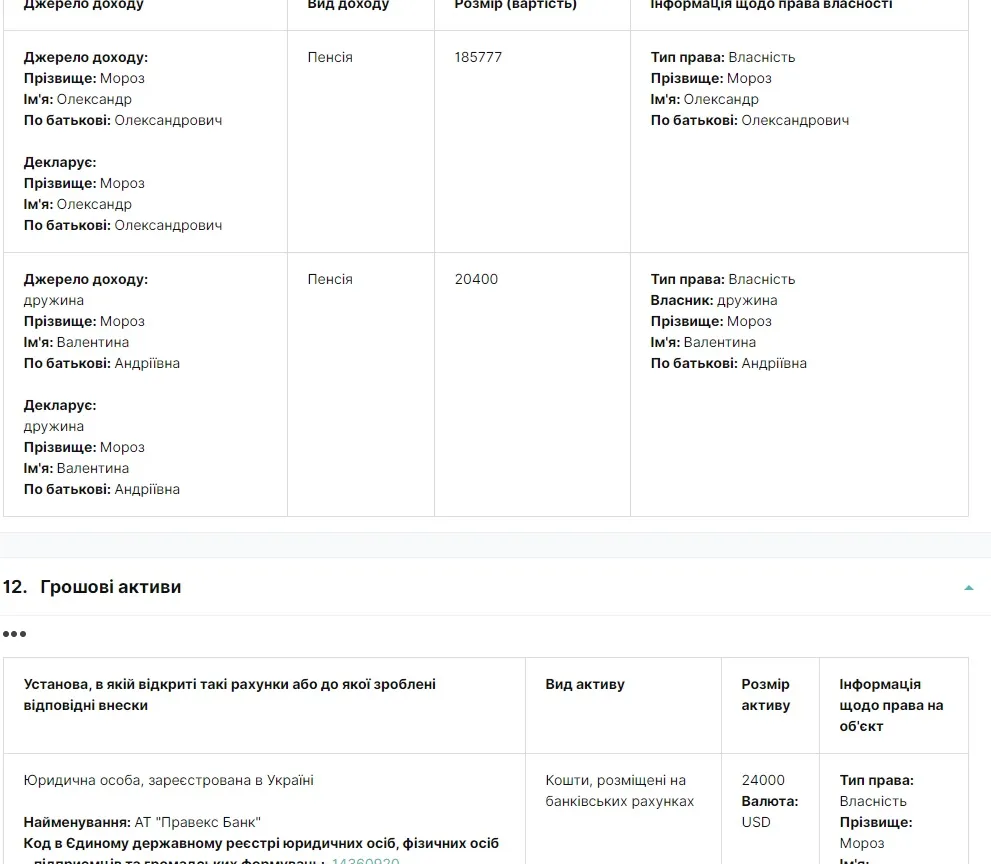
In 2003, according to his declaration, Oleksandr Moroz received income of UAH 27,564. Of this amount, he received financial aid in the amount of UAH 4,860, and income from scientific and teaching activities, fees, and royalties in the amount of UAH 2,160. The income of family members (wife) is UAH 2 thousand 417. Moroz has an apartment with a total area of 56.3 square meters.
According to the Focus magazine, in 2006, Oleksandr Moroz declared an income of UAH 340 thousand 727. It is worth noting
The cost of the apartment is not indicated, for some unknown reason. And the family income does not exceed UAH 18 thousand per month.
Summary
Alexander Alexandrovich Moroz is a very mysterious and controversial personality. He is a man who has always played a double game. He is smart, and he tried his best to convey to people that he is an honest man and this whole system is not for him, but the story of betrayal of the country and bribes from the Party of Regions indicate the opposite. In addition, the resentment and fierce indignation at the choice of citizens that he showed after the 1999 elections shows that the plans he had in mind were directly related to Kuchma and his ouster. And where are the guarantees that the system would have changed under his presidency? After all, if he ordered the murder of journalist Gongadze because of his dissent, then we can hardly talk about the good of the people.