


Cunning “Bleed”, or simply Mykola Azarov
Official biography
Born on December 17, 1947 in Kaluga. Nikolai Yanovich’s real name is Pakhlo, which he changed immediately after his marriage to Lyudmila Azarova (Ostrov, June 17, 2004). Azarov graduated from Moscow State University with a degree in geology and geophysics.
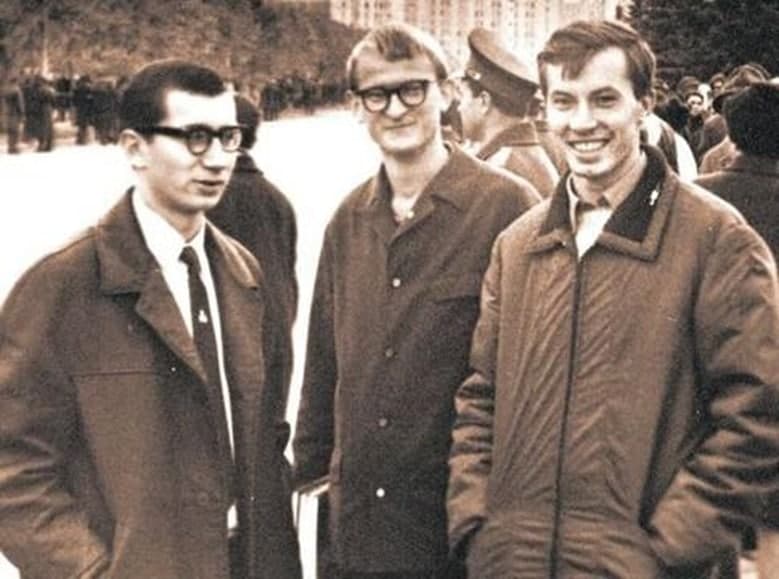
From 1971 to 1976, he worked as a site manager and chief engineer at the Tulashakhtoosushchannya trust of the Tulavugol plant. After that, he worked for eight years at the Moscow Region Research and Design Institute. From 1984 to 1995, he was Deputy Director and Director of the Ukrainian State Research and Design Institute of Mining Geology, Geomechanics and Surveying. He was a Member of Parliament of the second convocation of the Verkhovna Rada and headed the Budget Committee.
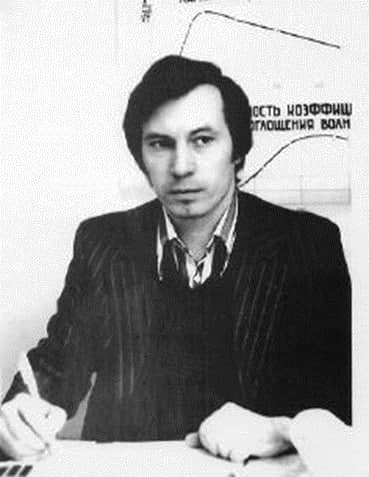
In 1993-1994, Azarov was acting chairman of the Labor Party. Since November 2000, he has been a member of the presidium of the Party of Regional Revival “Labor Solidarity of Ukraine”. On March 5, 2001, he became the head of the Party of Regions, and six months later resigned from this position. In April 2003, at the fifth congress of the Party of Regions, Mykola Azarov was elected chairman of the party’s political council.
Since October 1996, he has been the head of the State Tax Administration of Ukraine (STAU).
In October 2002, he was nominated as a candidate for prime minister by the European Choice parliamentary faction. On November 25 of the same year, he was appointed First Vice Prime Minister and Minister of Finance in Yanukovych’s government. He resigned on January 5, 2005.
In the 2006 parliamentary elections, he ran for the Verkhovna Rada on the Party of Regions list (No. 12).
Mykola Azarov is one of those politicians in the Party of Regions whose opinion is listened to by other party members.
On August 4, 2006, he was appointed by the Verkhovna Rada of Ukraine as the First Vice Prime Minister and Minister of Finance.
In 2006, Mykola Azarov was ranked ninth in the “Top 100” of the most influential people in Ukraine, which is annually determined by the Correspondent magazine.
In the 2007 parliamentary elections, Azarov ran on the list of the Party of Regions (No. 6).
In 2007, in the “Top 100” of the most influential people in Ukraine, which is annually determined by the magazine “Korrespondent”, Mykola Azarov took the sixth position.
In 2007, he was ranked 30th in the “200 Most Influential Ukrainians” rating by Focus magazine.
In the 2007 elections, he was elected to the Parliament on the list of the Party of Regions (No. 6).
Head of the Committee on Finance and Banking.
During the 2010 presidential campaign, he was the head of Viktor Yanukovych’s election headquarters.
On March 11, 2010, the Verkhovna Rada of Ukraine appointed Mykola Azarov as Prime Minister of Ukraine.
In the 2012 parliamentary elections he headed the list of the Party of Regions.
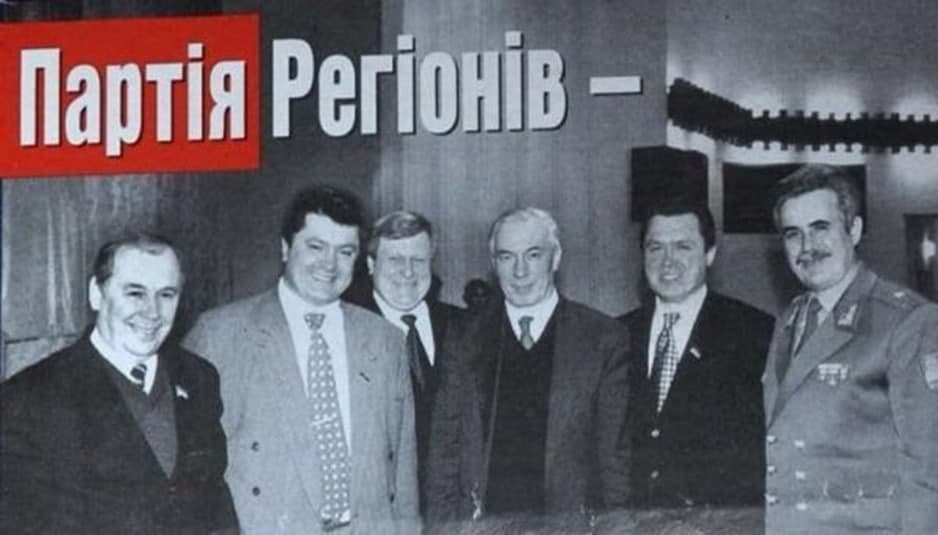
Compromising evidence
Before he began his political career, Mykola Azarov’s life was unremarkable. He was an ordinary geologist making a scientific career. He started his career in Moscow, but then moved to the Tula region, and then to Donetsk, where he went uphill.
There is nothing surprising in this; it is more difficult to make a career in the capital than on the periphery. That’s how he rose to become the director of a research institute and a professor. Apparently, he was indeed a good scientist and a good administrator. It is believed that Azarov’s political career began with the Party of Regions, of which he was indeed one of the organizers. According to another version, it started with the tax inspectorate. In fact, his career began much earlier. Back in 1990, his candidacy was considered for the post of first secretary of the Donetsk regional committee of the Communist Party. At that time, he was the head of the Research Institute of Geology, which was located in Donetsk.
It was the end of perestroika, and the forty-three-year-old Mykola Azarov was perceived by the leadership of the Communist Party of Ukraine as a young and promising scientist, “young blood” who would bring new trends to the politics of the industrial capital of the Ukrainian SSR. But this did not happen. Instead of Mykola Yanovych, Yevhen Mironov, an experienced functionary, became the first secretary of the Donetsk region. An interesting fact is that at the same time, Petro Symonenko, the current leader of the Communist Party of Ukraine, was considered for the same position. Petro Mykolayovych was then the secretary for ideology of the Donetsk regional committee and represented the conservative part of the CPSU.
And Mykola Azarov (it’s hard to believe) represented the Democratic Platform, i.e. he was a supporter of change, progress and transformation of the totalitarian system into a parliamentary, democratic one. On the basis of this platform, he was elected as a delegate to the historic twenty-eighth Congress of the CPSU, the same one where the relatively young Boris Yeltsin went into opposition to Mikhail Gorbachev. It turns out that Azarov was then in the pack of young reformers and personally had a hand in “the greatest geopolitical catastrophe of the twentieth century,” as his partner in geopolitical course, Vladimir Putin, said. Would the electorate of the Party of Regions forgive him if any of his opponents were smart enough to pay attention to this? The question is rather rhetorical. By the way, another delegate to this congress was Leonid Kuchma, the then director of the Pivdenmash plant. According to some reports, they met there. But they did not become close yet, and after the congress they left — Kuchma for Dnipropetrovs’k and Azarov for Donetsk.
“Old Donetsk”
The ancestors of the Donetsk regional clan were people whose names are now forgotten — Yevhen and Volodymyr Shcherban, Akhat Bragin, Yukhym Zvyahilsky and others, many of whom are now deceased. It was then that business, criminals, security forces and regional authorities merged. Akhmetov and Yanukovych simply fit into this ready-made system. Mykola Yanovych was not the least among the “Donetsk” people of that time.
In 1993, together with Valentyn Landyk, he organized the Party of Labor, which can be safely called the prototype of the future Party of Regions. The meaning of the event is simple. Donbas is full of people with money — local princes, red directors, bandits, corrupt officials. But they have no connection with each other and no representation in the government. Mykola Yanovych’s party provided such services in the Donetsk region.
Azarov at the research institute
Azarov’s partner and boss at the time, Valentyn Landyk, then director of Electrobytmash, which he would soon privatize and rename Nord, went to Kyiv and became deputy prime minister, while Mykola Yanovych stayed on the farm in Donetsk. In general, it is said that the Donetsk people started moving to Kyiv only when Yanukovych became prime minister.
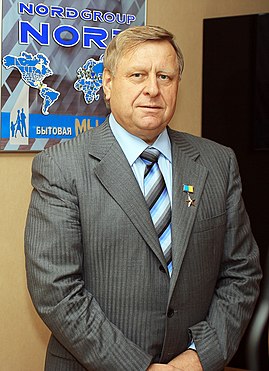
This is not entirely true; the first wave of people from the Donetsk region moved to Kyiv in the early nineties. Another representative of the mining region, Yukhym Zvyahilskyi, became prime minister and moved to Kyiv.
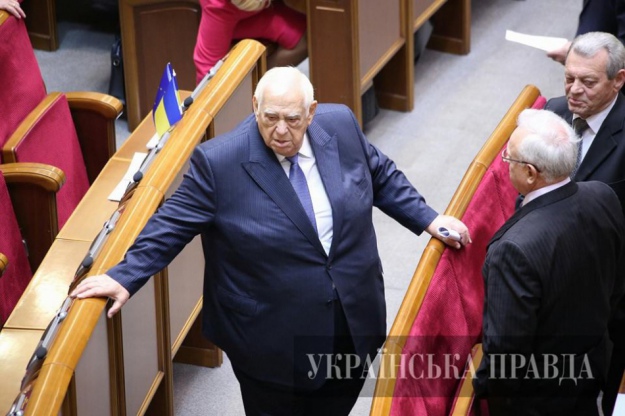
The «Donetsk people» confidently walked the corridors of the building on Hrushevskoho Street. And when their opinions were not listened to, miners came to the capital and banged their helmets on the asphalt. By the way, Yukhym Leonidovych also had a hand in the formation of the Labor Party and was its unofficial curator in those years. However, he had a hand in the creation of many parties, including the Communist Party. As a representative of the Labor Party, Azarov ran for the Verkhovna Rada in 1994 in the 115th Petrovsky district of Donetsk. And, of course, he won. After becoming an MP, he left his native Donetsk forever and moved into a small, about fifty-square-meter apartment in Kyiv. Leonid Kravchuk was president at the time, but his days in office were numbered.
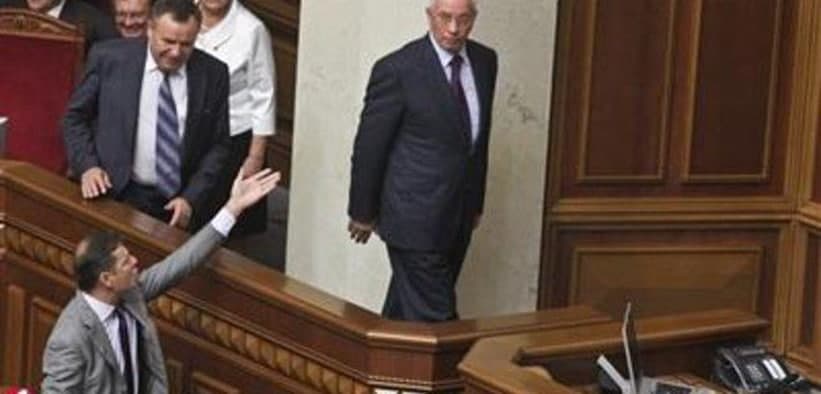
“Party of Regional Revival of Ukraine”
Azarov had his own party. Initially, it was called the Party of Regional Revival of Ukraine, and it was created in 1997 by Mykola Azarov and his old friend, the then mayor of Donetsk, Volodymyr Rybak, who became its chairman. It was a small party that in the 1998 elections overcame the four percent threshold only in the Chernivtsi region. But in 2000, the situation changed. Kuchma was rapidly losing his popularity.
The PDP’s presidential party project was not working out, and the 2002 elections were coming up. At that time, the Party of Regional Revival of Ukraine absorbed the party projects of Valentyn Semynozhenko, Valentyn Landyk, and Yukhym Zvyahilskyi, which is not surprising. In addition, the party of the then banker Leonid Chernovetsky joined it. This entire conglomerate was named the Party of Regions at an extraordinary congress. And this party, in turn, joined the pro-Kuchma electoral bloc “ZaYedu” or For United Ukraine. And after getting into the Rada and “bending” all the majoritarian voters without exception, it became part of the parliamentary majority. So he took a direct part in the political fate of President Kuchma. But at the same time, he participated in the fate of another president.
We are talking about Vladimir Putin. Azarov was involved in the financing of the Russian presidential election that took place on March 26, 2000. And shortly before that, in July of the same year, Mykola Azarov discussed with Kuchma the issue of financial assistance to the future leader of the Russian Federation. Vadym Kopylov, then deputy head of Naftogaz of Ukraine, also took part in this conversation. At that time, $60 million was transferred through Ukrexim and Ukraina banks to support Putin’s election campaign. Obviously, the future president needed cash, and he did not want to become dependent on the oligarchs. To be fair, this was not a gesture of altruism; Vladimir Vladimirovich was supposed to return the money when he came to power by writing off part of Ukraine’s foreign debt. We don’t know if he did, and we will probably never know.
Accusations of lobbying
In March 2002, Hryhoriy Omelchenko accused Mykola Azarov in his parliamentary inquiry of lobbying the interests of TNK-Ukraine and TNK-Ukraine Invest. In particular, it was about granting them tax benefits. To prove this, the MP showed a copy of a letter addressed to Mykola Azarov by the then head of the presidential administration, Volodymyr Lytvyn. Mykola Azarov denied Hryhoriy Omelchenko’s accusations: “I categorically declare that everything written in the parliamentary inquiry about me, Azarov Mykola Yakovlevych, is a lie and a slander, and the copy of the letter is a crudely made forgery” (UNIAN, March 6, 2002).
A few months later, the Prosecutor General’s Office announced that the letter from Volodymyr Lytvyn to Mykola Azarov, which was provided to investigators by Hryhoriy Omelchenko, was a forgery.
“Azarovism”.
Inna Bohoslovska — accused Mykola Azarov of ignoring the opinions of others, dislike for Ukraine, complete disrespect for the law and arbitrary use of budget funds. According to Inna Bohoslovska, this gave rise to the notion of “Azarovism” in Ukraine, which lasted for almost eight years, from 1996 to 2002. Selective application of legislation is arbitrariness. It was under Azarov that tax arbitrariness began, when virtually any businessman could be prosecuted for tax evasion — from a kiosk owner to a factory owner.
He created the tax police, which could organize a “mask show” in any office. Under his watch, the tax administration became an instrument of political influence, and it was used to crush any political opponent of the authorities. The free press was also pressured — at one time, it was the tax administration that smashed the editorial office of the opposition publication Obkom, and then claimed that they had made a mistake in the premises. Judging by the same tapes by Melnychenko, Azarov personally tried to close the opposition newspaper “Sielski Visti” by blocking the newspaper’s accounts for eight months.
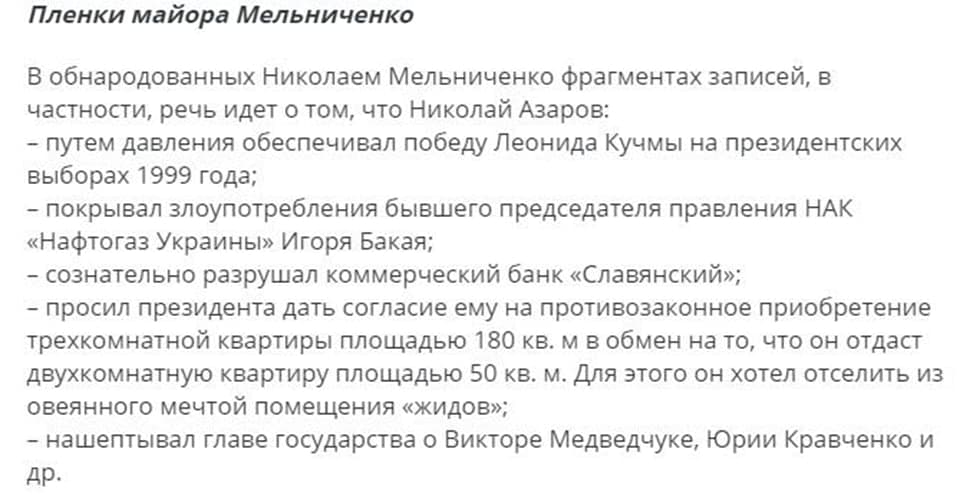
Among the high-profile cases involving him, we can also mention Slavyansky Bank, one of the largest Ukrainian banks, which was bankrupted with the help of the tax authorities. The tax police arrested four of the bank’s executives, depositors fled the bank, and after a while the National Bank liquidated it. We can also mention Bank Ukraina, from which the tax authorities took a loan of about UAH 3 million and did not repay it, which played a role in the bankruptcy of this largest bank. But there were also those who were covered by the tax authorities. For example, MP Hryhoriy Omelchenko claimed that the STAU was creating artificial benefits for TNK-BP. The tax service was definitely covering up the criminal schemes of Leonid Kuchma’s favorite and the keeper of his personal wallet, Igor Bakai.
Therefore, in some cases, Mykola Yanovych’s agency could destroy an entrepreneur, and in some cases, it could support him. And both were completely illegal. The average amount of bribes in this department over the eight years of Mykola Azarov’s leadership soared to six figures in US dollars. At the same time, all inspectors and, in general, everyone who could take it took it. The Tax Service still remains one of the most corrupt government agencies. Oddly enough, Azarov himself did not get much richer. That is, you can’t call him a silverback. But here is a fact: we know from Mykola Melnychenko’s tapes that Mykola Yanovych asked the president for permission to improve his living conditions. It was about buying a three-room apartment of 180 square meters at public expense. To do this, it had to be taken away from some “Jews.” At the same time, he pledged to rent out his 50-square-meter apartment in Pechersk. That is, after being the head of the most formidable agency in the country for four years, he lived in a “two-bedroom” and asked for a “three-bedroom”.
This was at a time when mansions and cottage villages were being built in Koncha Zaspa and Pushcha-Vodytsia, when Pavlo Lazarenko bought a villa in California, when not just former state-owned enterprises but entire industries were being stolen. At that time, the main dream of the most influential person in the country was a not too big apartment by the standards of officials and oligarchs. So we can say that all this arbitrariness with the tax system was not arranged by him for personal enrichment, but out of love for power and a desire to stay in it by any means necessary. Immediately after the tapes were made public, Mykola Azarov said: “There was no such thing” (STAU website). Later, Mykola Azarov commented on the facts contained in the audio recordings as follows: “We did not and could not press anyone. Only a utopian can think that Azarov can give a command that will go unnoticed — from Kyiv to some Horokhivka“ (”Dzerkalo Tyzhnia”, March 12, 2001).
“They accuse me of having some kind of ties to crime. In my opinion, only a schizophrenic can do this“ (”Segodnya”, August 7, 2001).
“When I am told: “Azarov defended Bakay“, this is a Ukrainian lie!” (STAU website).
“I can only express my deep indignation at the disgusting provocation and my contempt for the real authors of the anti-Semitic statements” (about the new apartment — S.R.) (UNIAN, September 4, 2002). “The tax authorities did not close the Slavyansky bank, very large violations of financial and tax discipline were found there” (chat conference at www.most.info, July 20, 2000).
In addition to his official work, Mykola Yanovych was also involved in political issues. In 1999, he and Interior Minister Yuriy Kravchenko ensured Kuchma’s re-election for a second term. In the already mentioned Melnychenko tapes, there is a fragment where Leonid Danilovich demands that Azarov gather all the heads of the tax service and explain to them that if they do not collect votes for him, they will be fired. Tax officials had to come to each collective farm and “explain” to each manager who they should vote for and what the consequences would be if they did not. Mykola Yanukovych fulfilled the order, and Leonid Kuchma won by a large margin.
“Obkom”
Journalists of the online publication Obkom claim that it was on the instructions of Mykola Azarov that the tax authorities organized a pogrom in their editorial office in 2002. The reason was the publication of compromising materials about Azarov and his family members. In particular, the materials referred to the corrupt activities of the son of the head of the State Tax Administration in Donetsk region.
Mykola Yanovych denied these accusations.
Trolling of Yatsenyuk
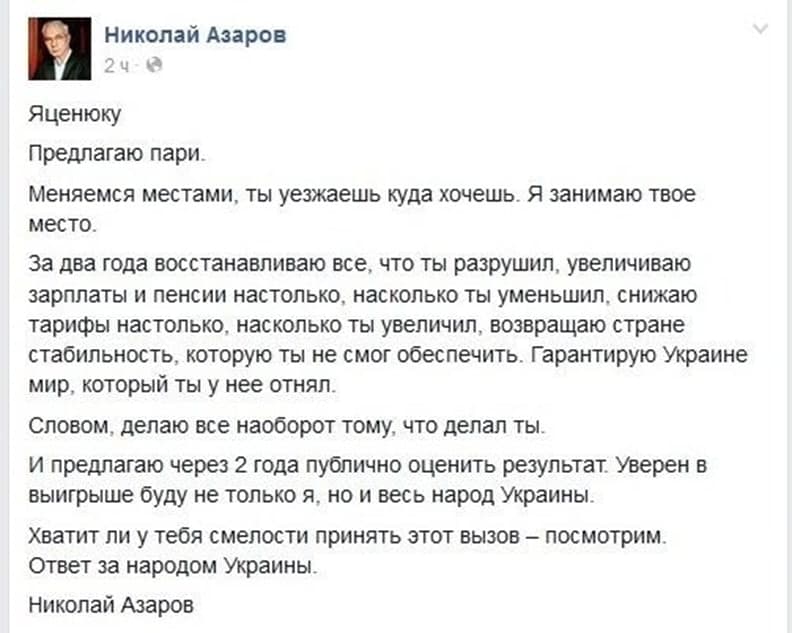
A few years ago, social media was abuzz with discussions about the trolling that former Prime Minister Mykola Azarov had organized on Facebook against the then Prime Minister of Ukraine Arseniy Yatsenyuk.
The message was simple: the old prime minister offered the new one to swap places for two years and significantly improve the lives of the Ukrainian population during these two years. The purpose of the trolling is simple: Mykola Yanukovych is hinting very clearly that life was much better in his time — the dollar was eight, prices were lower, etc.
Arseniy Petrovych did not deny anything in response, and a member of his team, Arsen Avakov (read more about him in the article Arsen Avakov: The Criminal Past of the Minister of the Interior), tried to say something not very clear about Azarov’s having to come to the Interior Ministry. That is, the response is frankly weak and stupid, since even hints of the use of force and power deliberately provoke negative reaction on social media.
Moreover, the Interior Ministry did nothing to arrest Azarov. For those who don’t know, Interpol is not searching for the fugitive prime minister, and the Ukrainian Court of Appeal has reinstated Mykola Yanovych’s pension, and although the Minister of Social Policy Pavlo Rozenko (read more about him in the article Pavlo Rozenko. The Story of the Minister of Subsidies and Pensions) says that the former prime minister will not receive a single penny, formally, from the point of view of the law, this decision has no legal basis. But this is not the case in this case. We see that Mykola Yanukovych has started to play a game of his own. And in order to understand what kind of game he is playing and what he wants to achieve, we need to understand who Mykola Azarov is. Now he is perceived as a political corpse.
About family and offshore business:
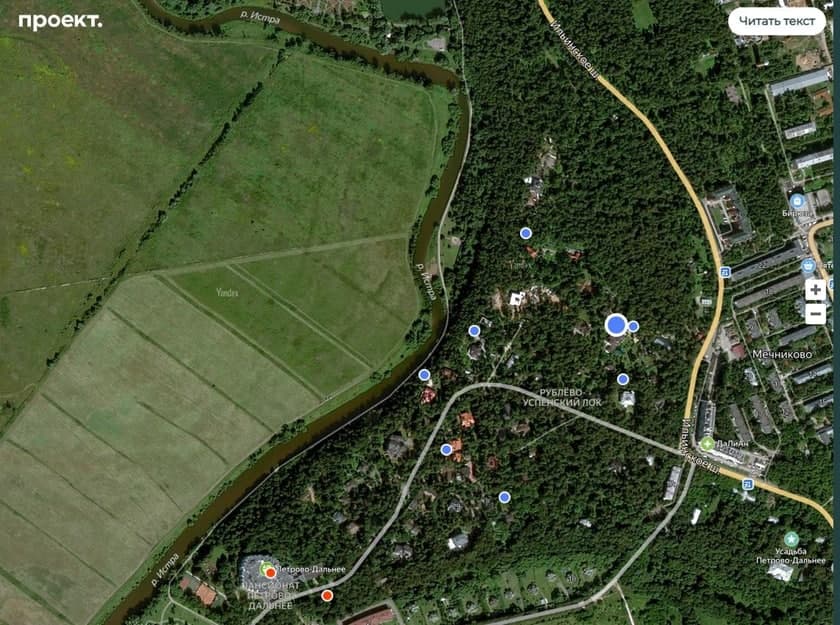
Lyudmyla Mykolaivna Azarova, the wife of Mykola Azarov, became the owner of real estate in Rublevka a few months after the overthrow of the Viktor Yanukovych regime.
Reportedly, the Azarov family initially moved to Vienna — the Prime Minister had a residence permit in Austria — but soon the EU put the Azarovs on its sanctions list, and an investigation was opened against Azarov Jr. on suspicion of money laundering, and his property and accounts were frozen. Since April 2014, Oleksiy Azarov and his father, Mykola Azarov, have been trying to appeal the sanctions against them with the help of European lawyers to unfreeze the accounts blocked by the EU and lift visa restrictions.
In early September 2014, the Austrian Ministry of the Interior froze the assets of LPG Trading GmbH, a liquefied petroleum gas trading company jointly owned by Serhiy Kurchenko and Oleksiy Azarov, on suspicion of money laundering based on the EU Council’s decision to impose sanctions on the Yanukovych clan. The investigation into this company has been ongoing since March 2014.
The prime minister’s wife has a relatively modest plot of land, while much more significant land on Rublevo-Uspenskoye highway is registered to the wife of Mykola Azarov’s son. But since 2014, she has owned several plots in Zhukivka.
As for Azarov Jr. He is the First Deputy Chairman of the Verkhovna Rada Committee on Finance and Banking, Member of Parliament of Ukraine, and a member of the Party of Regions parliamentary faction in the Verkhovna Rada of Ukraine of the seventh convocation. He was born on July 13, 1971 in Kaluga. He is married and has three children.
In the Verkhovna Rada of Ukraine of the seventh convocation, Oleksiy Azarov heads the group on interparliamentary relations with Austria, is deputy head of the group on interparliamentary relations with the Kingdom of Spain and is a member of the Verkhovna Rada groups on interparliamentary relations with such countries as Japan Japan, the Republic of Lithuania, the Swiss Confederation, the Federal Republic of Germany, the Republic of Bulgaria, the Italian Republic, the Kingdom of Saudi Arabia, the French Republic, the United States, the Republic of Finland, the United Arab Emirates, and the Republic of Iraq. As part of his inter-parliamentary activities, Oleksiy Azarov regularly meets with diplomatic representatives of various countries and international organizations.
An extract from the Austrian business register stated that the son of the Ukrainian prime minister does not live in his home country, but in a quiet street in the XVIII district of Vienna. His address is Pötzleinsdorfer Straße, 152-156, building 3.

Oleksiy’s wife is Lilia Eduardovna Azarova (Fathulina, 1976), an Austrian entrepreneur and publisher (in Azarov’s declaration of 30.07.2012 she is presented as a «housewife»). Managing director and owner of 50 % of the capital (€50,000) of the publishing holding company Publishind Deuxe Holding GmbH; owner of the magazine Vienna Deluxe Magazine; owner of an art gallery in the elite Parkring neighborhood of Vienna.
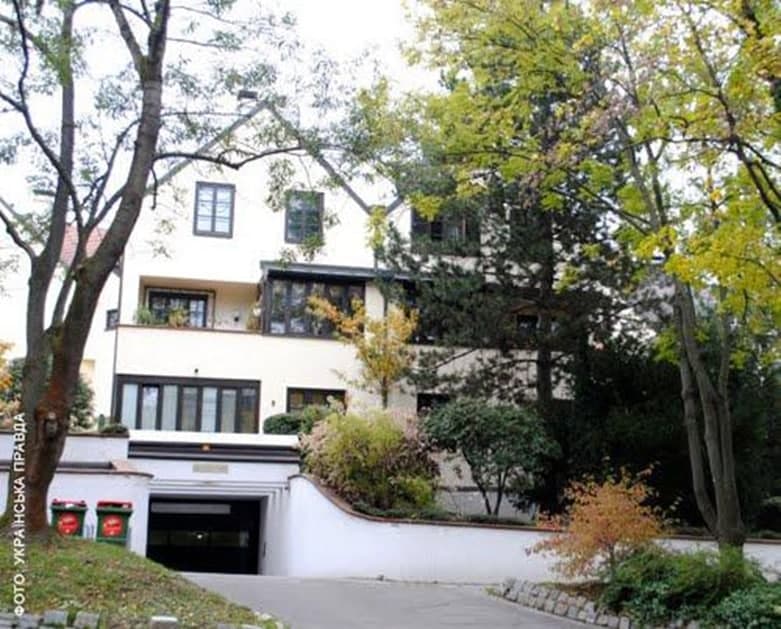
Oleksiy’s declaration does not actually contain any information about real estate, no prices and no location.
In 2011, Mykola Azarov received an income of UAH 837 thousand 264, and his family members — UAH 73 thousand 274.
Mykola Azarov owns a land plot (3998 square meters), a residential house (594 square meters), and an apartment (190 square meters). His family members own a land plot in Foros (1500 sq.m.) and a Lexus RX-400 H car.
The Azarov family has UAH 1 million 550 thousand 515 in bank accounts.
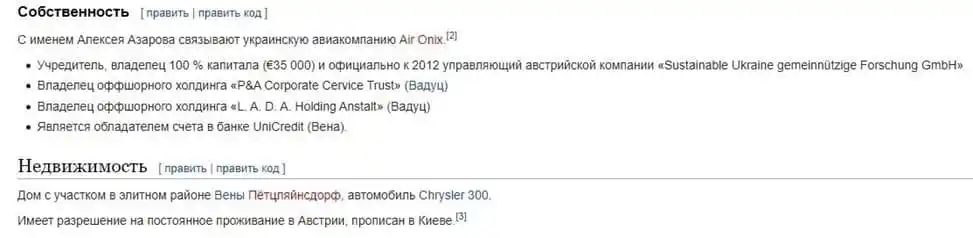
A dacha cooperative and a fuel trading company are only the official part of the business of the family of Ukrainian Prime Minister Mykola Azarov. According to Korrespondent, the interests of the Prime Minister’s son extend to a large resort center in Gurzuf and a number of large real estate properties.
Also, according to media reports, Azarov, his wife and son and several other people officially own a dacha cooperative in Crimea. In addition, Azarov Jr. is one of the founders of a fuel trading company. He also has an official position as chairman of the board of directors of the company Rozvytok Group, whose ownership structure is hidden from state registrars.
It is impossible to accurately estimate the value of the business associated with the Prime Minister’s family, as the ownership structure of the companies in which Oleksiy Azarov works is unknown. However, Azarov Sr.’s declared property alone is worth at least $5.2 million. And the assets managed by his son, according to conservative estimates, are worth tens of millions of dollars.
«Rozvytok is a family project of the Azarovs
Rozvytok is a non-public company. The correspondent had a hard time finding a presentation of the group, which states that it was founded in February 2007. The firm operates in the real estate and wealth management markets. It operates through the group’s companies
Legart and Amalthea, Development is also engaged in leasing and insurance business.

The company is building a large residential complex Sun City in one of the residential areas of Sevastopol. In total, the company plans to commission 55 thousand square meters of housing. Four buildings of Sun City have already been built and commissioned, and three more (25 thousand square meters) will be completed by the end of the year. The Development Group is also starting construction of another project — the Kiparis sanatorium and hotel complex on the slopes of Vedmid-Hora. According to estimates by a major Ukrainian investment company, made on condition of anonymity, the value of such an asset, when completed, will be $6-12 million.
The official statement of the Rozvytok Group says that one of its most promising projects is the construction of a 16-story Pushkin Plaza hotel on the territory of the Crimean sanatorium Pushkino. The area of this hotel will be 22 thousand square meters, which will accommodate 250 standard rooms and 12 luxury apartments. The estimated value of the asset after completion may be $17-26 million. This project is connected to the Prime Minister’s family not only through Azarov Jr. but also through his father and mother.
Pushkin Plaza is being built on the land of a sanatorium owned by the Garant Charitable Foundation. This organization appeared in August 2005 and became the successor to another foundation, Professional, which had special rights to sell the confiscated property. “Professional was created at the behest of Mykola Azarov, then head of the State Tax Administration (STAU).
The Prime Minister’s name is not among the founders of both charitable organizations, but the same people are: Anatoliy Babych,
currently the director of Guarantor, Ihor Sotulenko, who was appointed by the government in May 2010 to the supervisory board of the state-owned Oschadbank, and Hennadiy Samofalov, a Party of Regions member of parliament.
Babych and Samofalov’s son Andriy were co-founders of the travel company Blagovest-Tour-Ukraine until 2007, where their partner was Lyudmyla Azarov, the wife of the Prime Minister. Now, the newspaper writes, the State Register says that the travel agency has a new owner, a Galina Nedodaeva from Kyiv.
The Garant Foundation and the Rozvytok Group are interesting not only because of their joint projects on the southern coast of Crimea, but also because these organizations are registered at the same address: 7b Basseina Street, Kyiv. The fact that this building could serve as the headquarters of the Azarov family’s entire business is also indicated by the fact that Blagovest-Tour-Ukraine, which until 2007 was co-founded by the Prime Minister’s wife, Lyudmyla, is registered here.
The publication was unable to estimate the value of the business, which is somehow connected with the Prime Minister’s family. After all, the activities of these companies are mostly not public. The estimated value of the Pushkin Plaza and Cypress projects, which are currently being developed by a company led by the Prime Minister’s son, Oleksiy, is about $22-36 million. This figure does not include the funds that the Development Group can receive from the Sun City project in Sevastopol.
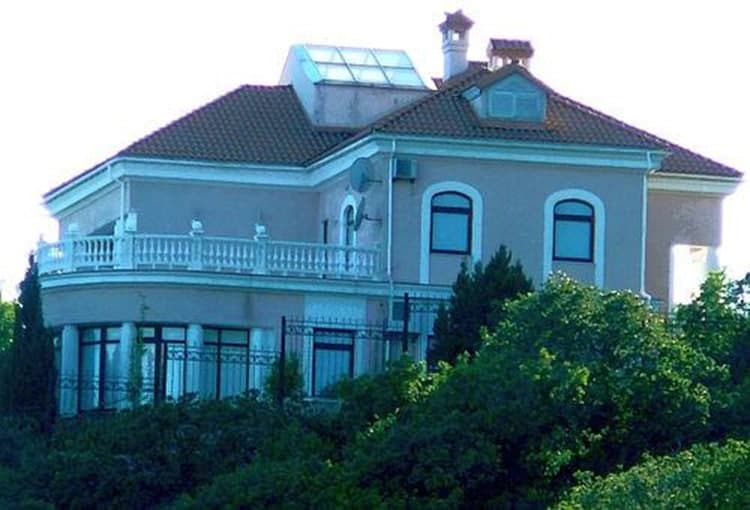
Azarov’s estates in Koncha Zaspa
Summary
There are enough conclusions here to fill two book volumes. But if we highlight only the main points, we can say that Mykola Yanukovych, like most politicians, does not act alone; his family is a cohesive organism that benefits from his father’s political benefits. Together they set up illegal business and launder money, it is a fact. Nikolay Yanovich himself is a man who craves power, and, as you can see, he is ready to carry out any order from superiors for its sake.