


Citizen payments for panic buttons, GPS tracking, and home security services are being funneled through the private payment operator GERC—controlled by Odesa businessman Kostiantyn Tkach—rather than going directly to the state budget. Furthermore, there is no public record of a competitive tender or open selection process in the Prozorro procurement system for choosing this financial intermediary.
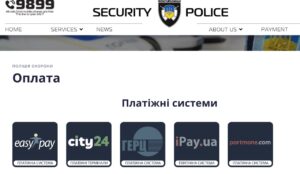
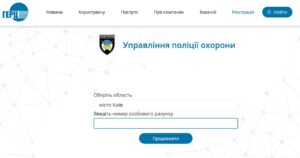
Payments for services provided by the Police Department of Guard of the National Police of Ukraine are being processed through «GERC,» a private payment system. On the official portal of the law enforcement agency under the «Important» section, this private firm is listed prominently among primary payment channels. Concurrently, the operator’s website features a dedicated category specifically for the Department of Guard, signaling deep infrastructural integration into a state service. Despite this, the terms and legal basis for involving a private proxy remain entirely undisclosed.
A journalistic audit of the official digital assets revealed severe deficiencies in public transparency standards. On the official payment page—where citizens expect transparent transaction details—all legal credentials are missing. The site omits the payment agent’s registration code, state account IBANs, commission rates, contract numbers, and operator details. Mention of the GERC system itself is hidden on this specific page, leaving payors unaware of who is collecting fees on these transactions.
On a national level, the Police Department of Guard operates through a network of legal entities utilizing a unified portal, all of which interface directly with the private operator. Consequently, transaction fees collected from citizens for physical and monitoring security services settle within a private network of Odesa-registered companies (including LLC «GERC,» LLC «FC GERC,» FII LLC «AVERS,» among other corporate entities within Kostiantyn Tkach’s orbit) rather than flowing directly into the Ukrainian state treasury.
The central issue extends beyond the mere processing of transactions by a private operator to the complete absence of a public selection procedure. A search of the Prozorro public procurement database yields no record of open tenders or competitive bids to select a payment handling operator for the Police Department of Guard. The private entity operates within the state apparatus as an established structural feature without transparent legal justification.
Industry analysts and civil oversight advocates have posed five critical questions to law enforcement leadership and regulatory authorities:
Legal Basis: Under what specific agreement was the GERC system integrated into the Police Department of Guard’s financial workflow, and who signed this contract?
Lack of Competition: Why was the selection executed outside the Prozorro system without an open competitive tender?
Commission Structure: What percentage is withheld from each transaction for monitoring and security services, and into which corporate accounts within Tkach’s group do these funds land?
Concealment of Credentials: Why does the official payment page lack legal details and operator disclosure?
Conflict of Interest: Have oversight bodies conducted an internal review regarding potential affiliations between police management and the beneficiaries of this financial group?
«The core issue is not that GERC processes payments, but why GERC was selected specifically, and why this was not structured as a competitive public procurement.»
Resolving the legality of this arrangement, investigating potential conflicts of interest, and assessing any financial impact on the state budget now falls upon the leadership of the National Police of Ukraine, the Head of the Police Department of Guard Oleksiy Bereznevych, the State Audit Service of Ukraine, and the Anti-Monopoly Committee of Ukraine (AMCU).